
Synphase is a combined oral contraceptive pill containing norethisterone (a progestogen) and ethinylestradiol (an oestrogen). It prevents pregnancy by stopping ovulation, thickening cervical mucus to block sperm, and thinning the lining of the womb to reduce implantation.
Synphase is a phased (triphasic) pill, with tablets of different strengths taken in sequence to mimic the natural hormone cycle.
Each pack contains 21 active tablets. When taken correctly, Synphase is over 99% effective at preventing pregnancy.
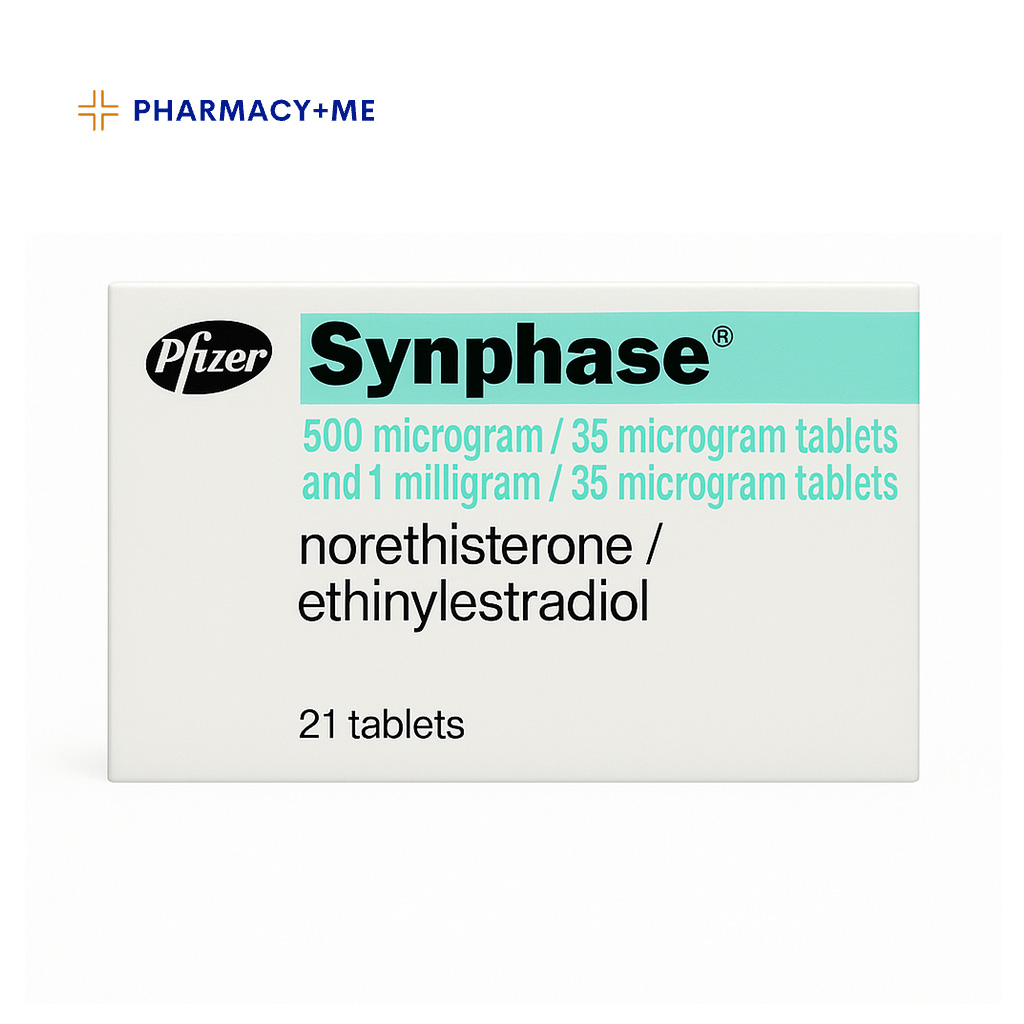
Synphase Tablets
From: £19.99
Description
Directions for Use
- Take one tablet every day at the same time, following the order shown on the blister.
- Take tablets for 21 days, followed by a 7-day tablet-free break.
- Start the next strip after 7 days, even if bleeding continues.
- A withdrawal bleed usually happens during the 7-day break.
Starting Synphase:
- Start on the first day of your period for immediate protection.
- If starting on Days 2–5, use extra contraception for 7 days.
Missed tablet:
- Less than 12 hours late: take as soon as remembered and continue as normal.
- 12 hours or more late: take the last missed tablet immediately and use extra contraception for 7 days.
- If fewer than 7 tablets remain, start the next pack without a break.
Vomiting or severe diarrhoea may reduce protection — continue tablets and use condoms for 7 days.
After childbirth:
- If not breastfeeding, start 21 days after delivery.
- If breastfeeding, do not use — seek medical advice.
After miscarriage or abortion:
- You may start immediately with immediate protection.
Side Effects
Serious side effects (seek urgent medical help):
- Blood clots (DVT, pulmonary embolism, stroke, heart attack).
- Sudden chest pain, breathlessness, leg swelling, severe headache or visual disturbance.
- Severe allergic reactions (swelling of face, lips, tongue or throat).
- Severe liver problems (yellowing of skin or eyes, severe abdominal pain).
Common side effects:
- Nausea or stomach upset
- Headache
- Weight gain
- Breast tenderness
- Low mood or mood changes
- Irregular bleeding or spotting
- Reduced libido
Report side effects via the MHRA Yellow Card Scheme.
Warnings
Do NOT take Synphase if you:
- Are pregnant or breastfeeding.
- Have ever had a blood clot, stroke, heart attack or angina.
- Have migraine with aura or severe migraine.
- Have severe liver disease or liver tumours.
- Have breast, cervical, vaginal or womb cancer.
- Have unexplained vaginal bleeding.
- Are taking certain Hepatitis C medicines (e.g. ombitasvir/paritaprevir/ritonavir, dasabuvir, glecaprevir/pibrentasvir, sofosbuvir/velpatasvir/voxilaprevir).
Speak to a clinician before use if you:
- Are over 35 and smoke.
- Are overweight.
- Have diabetes, high blood pressure, epilepsy, asthma, kidney disease, depression, gallstones, varicose veins, lupus or heart disease.
- Have a family history of blood clots.
- Have experienced chloasma (facial pigmentation).
Important information:
- Slightly increases the risk of blood clots and breast/cervical cancer, but reduces the risk of ovarian and womb cancer.
- Does not protect against STIs — condoms are recommended.
- Some medicines (e.g. epilepsy medicines, rifampicin, HIV medicines, St John’s Wort) can reduce effectiveness.
- Contains lactose.
Faqs
How effective is Synphase?
Over 99% effective with correct daily use.
Will Synphase affect my periods?
Periods usually become regular, lighter and less painful. Some spotting may occur initially.
Can I get pregnant after stopping Synphase?
Yes — fertility returns quickly after stopping.
What should I do if I miss a pill?
Take the missed tablet as soon as possible and use extra contraception for 7 days if 12 hours or more late.
Can I take Synphase after having a baby?
Yes, from 21 days after delivery if not breastfeeding.
Reviews (0)
Related Treatments








Reviews
Clear filtersThere are no reviews yet.